New installation
Full system application over prepared sheathing, including barrier, insulation, mesh-reinforced base coat, and finish.
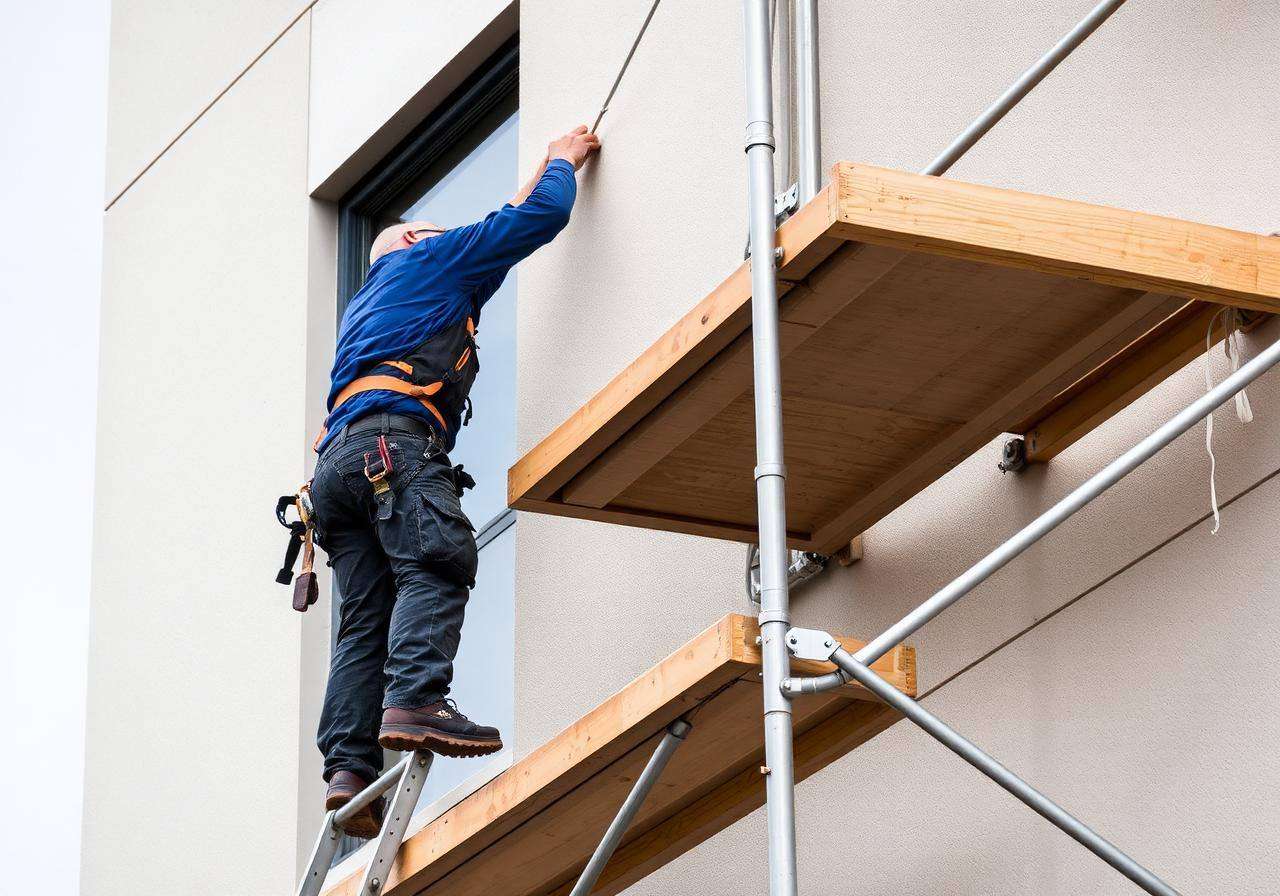
EIFS installation, EIFS repair, and commercial caulking are what stand between your building and the weather. Core Commercial Construction installs, repairs, and maintains exterior wall systems and sealant joints for owners and facility managers who would rather prevent water intrusion than pay to repair it.
We install complete exterior insulation and finish systems on new construction, additions, and re-clad projects: substrate preparation and air and water barrier, insulation board, base coat with reinforcing mesh, and the finish coat in the specified texture and color.
Details are where EIFS succeeds or fails. Terminations, window and door perimeters, expansion joints, and drainage paths get built to manufacturer specification — not approximated in the field.
Full system application over prepared sheathing, including barrier, insulation, mesh-reinforced base coat, and finish.
Refreshing tired elevations with a new finish coat or a full system replacement where the existing assembly has failed.
Cornices, reveals, banding, and trim shapes that give a commercial facade definition without masonry cost.
Impact damage at drive lanes and dock doors, cracking at stress points, soft spots from long-term moisture, and finish that has faded or delaminated are all repairable. What matters is finding out whether the damage stops at the finish or continues into the substrate behind it.
We open the affected area, assess the sheathing and framing, replace what is compromised, rebuild the system layers, and blend the texture and color so the repair does not read as a patch.
Commercial caulking is inexpensive compared to what failed joints let happen. We remove old sealant completely, clean and prime the joint faces, install proper backer rod for the joint depth, and tool the new sealant for full adhesion on both sides — the details that determine whether a joint lasts fifteen years or two.
We also handle interior sealant work as part of commercial buildout projects, including fire-rated joints and wet-area sealing.
Sealant is a wear item. When joints reach the end of their service life, spot-fixing the visibly failed sections leaves the rest of the elevation on borrowed time. We survey the building, document joint condition by elevation, and give you a replacement plan you can execute at once or phase across budget years.
Every joint gets the right product for its movement and substrate — silicone, urethane, or hybrid — rather than one tube used everywhere.
Water intrusion rarely announces itself. It shows up later as stained ceiling tile, corroded fasteners, rotted sheathing, mold remediation, and interior finishes that have to be rebuilt. Maintaining the envelope is the cheapest construction you will ever buy.
We can inspect your exterior annually, flag what is deteriorating, and handle the repairs before they turn into interior damage — and if they already have, our commercial remodeling team can restore the affected interiors.
One accountable commercial contractor from walkthrough to punch list — experienced crews, coordinated trades, and clear communication at every stage of the project.
Manufacturer-specified layers, terminations, and details — the parts of an EIFS or sealant assembly that decide how long it lasts.
We find where water is actually entering rather than covering symptoms with new finish or a bead of caulk.
Staged exterior access that keeps entrances, drive lanes, and parking usable while crews work.
Applicators who work with these systems routinely and know how weather and substrate affect the result.
Exterior and interior work from the same team, so envelope repairs and the interior restoration behind them stay coordinated.
Condition documented by elevation, priorities explained plainly, and written pricing before work begins.
EIFS — exterior insulation and finish system — is a multi-layer cladding of insulation board, base coat, reinforcing mesh, and a textured finish coat applied over the exterior wall. It is common on office buildings, retail centers, medical offices, and hospitality properties because it adds continuous insulation and allows architectural detail without masonry.
It depends on square footage, wall access, and weather. A single storefront elevation can be finished in a week or two; a full multi-story building envelope takes considerably longer. Base and finish coats need appropriate temperature and dry conditions, so we schedule around the forecast rather than pushing product on in bad weather.
In most cases, yes. We cut out the affected area, verify the sheathing and framing behind it are sound, replace any damaged substrate and insulation, rebuild the system layers, and blend the finish texture and color into the surrounding wall. Full replacement is only warranted when damage or moisture intrusion is widespread.
Most exterior sealant joints have a service life of roughly ten to twenty years depending on product, joint movement, and sun exposure. Inspect joints annually; cracking, chalking, loss of adhesion, or gaps at the joint edges mean the sealant is no longer keeping water out and should be replaced.
Yes. Exterior work is staged to keep entrances, drive lanes, and parking usable, with protection over walkways and pedestrian routing where needed. Noisy grinding or cutting can be scheduled outside business hours when it would interfere with tenants or customers.
Common signs are interior staining near windows or the wall base, bubbling paint, soft or discolored EIFS finish, efflorescence, and open or failed joints on the exterior. We inspect the envelope, identify where water is entering, and prioritize repairs by what is causing damage now versus what to plan for later.
Send us photos or walk the property with us. We'll assess the EIFS and sealant condition, tell you what needs attention now versus what can be budgeted for later, and put together a plan that fits your maintenance calendar.